

Wine Alternatives Without Alcohol: Compare Drinks and Pairings
Wine isn’t the only way to bring depth and a sense of occasion to the table. The best wine alternatives without alcohol depend on the flavour you’re after: alcohol-free wine can echo familiar grape notes and acidity, grape mocktails tend to be fruitier, and alcohol-free spirits bring botanical or bitter cocktail flavours. None tastes exactly like conventional wine, but each has its own character.
It makes sense to want more than a drink that simply fills a glass. The right choice can complement a meal, suit the mood and give everyone something considered to sip, whether you’re hosting dinner or keeping things relaxed.
This guide compares alcohol-free wines, grape-based mocktails and alcohol-free spirits by taste and food pairing, with a practical way to choose between them. You’ll see which styles work with dishes from savoury snacks to richer mains, and why a spirit-led serve can be refreshing when wine isn’t the flavour you want.
Key Takeaways
- Choose alcohol-free wine for familiar grape-led notes, or try mocktails and zero-alcohol spirits for fruitier or more botanical flavours.
- Compare ingredients and nutrition labels to find a drink that suits your taste and preferences.
- Match acidity, sweetness and bubbles to the food for a more balanced pairing.
- Use the decision guide to choose a wine-style pour, a sparkling option or a cocktail alternative for the occasion.
Do Wine Alternatives Taste Like the Real Deal?
Wine alternatives without alcohol include alcohol-free wine, grape juice, sparkling tea and kombucha. Each brings a different balance of fruit, acidity, sweetness and fermentation character, so none tastes exactly like traditional wine.
Nonalcoholic Wine
Dealcoholized wine begins as fermented wine, then has its alcohol removed. Its grape flavors and acidity distinguish it from juice, while sparkling tea tastes tea-led and kombucha has fermented tea notes. Most nonalcoholic wines contain 0.01% to 0.05% ABV; labels and terminology vary. If you’re avoiding even trace alcohol, choose a bottle labelled 0.0% ABV.
Ingredients and residual sugar shape the tasting experience. Some dealcoholized wines contain 8-12 grams of sugar per serving. Reviewed non-alcoholic drinks ranged from 21 to nearly 38 calories per standard 150 ml glass. Compare the nutrition panel as well as the flavor, especially when choosing a cabernet-style pour.
Grape Juice
Grape juice is unfermented and often sweeter, with a direct fruit flavor rather than wine’s fermented character. Sparkling tea offers tea aromas and bubbles; kombucha brings a fermented tang. For a low-sugar choice, the guide recommends aiming for about 3 grams of sugar or less per 5 oz when possible. Check the bottle’s nutrition information, since ingredients and sugar levels differ.
In the US, the cost of wine alternatives without alcohol varies by style, bottle and retailer. Compare the listed bottle size and serving information when weighing options. Dealcoholized wine is made by fermenting grapes and then removing the alcohol; most nonalcoholic wines contain 0.01% to 0.05% ABV.
US shoppers can look for these drinks through online beverage retailers and specialist shops. For pregnancy or strict alcohol avoidance, choose a product labelled 0.0% ABV rather than one that may contain trace amounts.
| Option | Typical character | What to compare |
|---|---|---|
| Dealcoholized wine | Fermented grape flavor | ABV and sugar |
| Grape juice | Sweet, fruit-forward | Sugar per serving |
| Sparkling tea | Tea-led with bubbles | Ingredients and sweetness |
| Kombucha | Tangy, fermented tea | Flavor and label details |
Choose according to the flavour profile and label details that matter most to you.
Alcohol-free sparkling wines and grape-based mocktails
Red, white, rosé and sparkling styles offer different grape expressions, while mocktails can move beyond wine-like flavours. Compare body, acidity and carbonation to find a balance that suits your palate.
Red Wine Alternatives
Alcohol-free red alternatives aim for darker fruit notes and a fuller impression, making them a useful choice when a meal calls for more depth. Their flavour can feel lighter than alcoholic wines, so serve them with dishes that won’t overwhelm the drink. A grape-based mocktail offers a fruit-forward contrast, while sparkling tea brings tea character rather than red-grape notes. Taste each style with food to find a satisfying match.
White Wine Alternatives
White alternatives tend towards brighter fruit and sharper acidity than red styles. That profile makes them an appealing choice for a fresh, crisp pour, while a grape mocktail may taste rounder and more directly fruity. Sparkling tea adds its own aromatic character. To find the right balance, consider whether you want wine-like structure or a simpler fruit-led flavour, then choose a bottle for the occasion.
Rosé Wine Alternatives
Rosé alternatives sit between red and white in colour and style, offering a lighter, grape-led option. Wednesday’s Domaine Rose Elan is an alcohol-free rosé for a pink pour. A grape-based drink or mocktail, by contrast, may lean more plainly towards fruit than the layered profile associated with rosé. Serve either chilled, and let the meal and your preferred acidity guide your choice.
Alcohol-Free Sparkling Wines
Sparkling wine alternatives bring bubbles and a celebratory feel, with carbonation lifting fruit flavors across red, white and rosé styles. A sparkling grape beverage can be sweeter and more juice-like, while sparkling wine aims for a closer wine-style balance. Grape-based mocktails offer another route, often combining fruit with additional ingredients. Noughty is a name you may encounter in this category; compare its label and flavor profile with other bottles.
For a grape-led pink pour, consider alcohol-free rosé and sparkling alternatives, then choose the style that best fits your table.
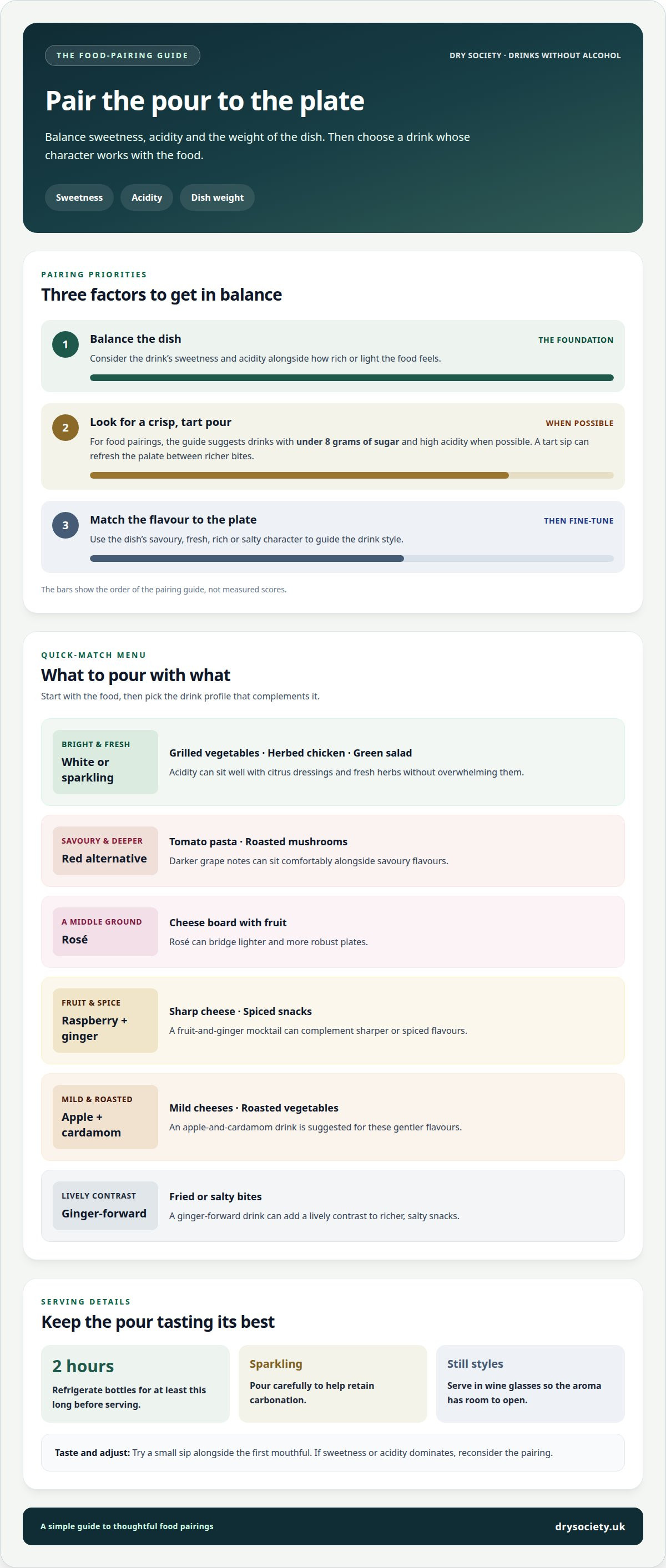
Pairing non-alcoholic drinks with food
A good pairing balances sweetness, acidity and the weight of a dish. For food, choose drinks with under 8 grams of sugar and high acidity when possible; a crisp, tart pour can refresh the palate between richer bites.
Match the drink to the dish
With grilled vegetables, herbed chicken or a green salad, try a bright white or sparkling style. Its acidity can complement citrus dressings and fresh herbs without overwhelming them. For tomato pasta or roasted mushrooms, a red alternative offers darker grape notes that sit comfortably alongside savoury flavours. Rosé can bridge lighter and more robust plates, such as a cheese board with fruit.
Grape mocktails and kombucha bring different pairing possibilities. Raspberry and ginger can complement sharp cheese or spiced snacks, while apple and cardamom suit mild cheeses and roasted vegetables. Ginger-forward drinks add a lively contrast to fried or salty bites. Taste a small sip alongside the first mouthful, then adjust the pairing if sweetness or acidity dominates.
Serve and store thoughtfully
Temperature and freshness shape the tasting experience. Refrigerate bottles for at least 2 hours before serving, then pour sparkling drinks carefully to retain their carbonation. Serve still styles in wine glasses so their aroma has room to open. A neat, clearly labelled drinks table also helps guests choose between grape-based beverages and other options.
After opening, reseal non-alcoholic wine and refrigerate it. Opened non-alcoholic red wine should generally be consumed within 5-7 days. For a meal with several courses, keep the bottle chilled between pours and match each glass to the next dish, rather than serving one flavor throughout.
Alcohol removed during dealcoholization can change a wine’s body, so pair by the drink’s remaining structure, acidity and sweetness. A high-acidity option with under 8 grams of sugar is a useful starting point for food; richer dishes can handle deeper flavors, while delicate plates benefit from lighter pours. That simple approach keeps the pairing delicious without masking the food’s complexity.
Zero-alcohol spirits and cocktail alternatives
Alcohol-free spirits offer a different route from traditional wine: they bring botanical, bitter or citrus-led notes to mixed drinks. Build a simple serve with an alcohol-free spirit, tonic or soda, and a fresh garnish such as lime. The result is a cocktail-style drink, not an attempt to recreate Sauvignon or grape juice.
For a more layered glass, combine a botanical spirit with sparkling water, citrus and a measured splash of fruit juice. Grapefruit adds a tart edge; orange softens sharper herbal flavors. A dash of vinegar-based shrub can add acidity and complexity, but use a light hand so it doesn’t dominate the drink.
Serve alcohol-free drinks cold at 40-45°F. Chilling helps keep a long drink refreshing, while ice dilutes the mix as it melts. Add the spirit alternative and mixer first, taste, then adjust citrus or sweetness. This small tasting step helps balance a drink before serving it to guests.
Alcohol-free spirits suit curious drinkers who prefer a cocktail ritual over a wine-style pour. They also give hosts a distinct option alongside grape-based drinks. For a simple menu, offer a botanical highball, a sparkling grape drink and still water. Keep each recipe clear, and label the drinks so guests can choose comfortably.
- For herbal notes: pair a botanical spirit with tonic and a citrus peel.
- For fruit: add a small measure of juice, then balance it with soda.
- For a lighter serve: use more sparkling water and less mixer.
Check the label for ingredients and calories, since recipes and mixers vary. An alcohol-free spirit is best when you want aromatic cocktail flavours; choose alcohol-free wine when grape character is the priority. Try a simple botanical mix first, then adjust its citrus, sweetness and dilution to suit the meal.
Explore alcohol-free drink options for an alternative cocktail-style pour.
Dry Society
Dry Society helps you put these comparisons into practice with a curated selection of premium alcohol-free drinks for different tastes and occasions. Choose wine-style options for grape-led character, or explore an alcohol-free spirit for a botanical cocktail serve.
The range includes the Alcohol-Free Wine Gift Duo - Pack of 3, Wednesday's Domaine Rose Elan - Alcohol Free Rose Wine, and Almave Ámbar & Blanc Christmas Agave Spirit Duo. For a food-led gift, the Christmas Pierre Zéro Rosé & Gruyère Drinks Biscuits Duo brings together a rosé option and savoury biscuits.
Use the tasting and pairing cues above to narrow down your preference, then explore Dry Society’s selection for a drink that suits your table or gifting occasion. If you’d like help choosing, contact Dry Society.
Make your next pour your own
Let your next occasion shape the choice. A relaxed supper might call for a grape-led pour, while a gathering with friends could be a chance to explore a botanical serve. Treat the glass as part of the hospitality: choose something that suits the menu, the mood and the ritual you want to create.
Dry Society offers options for different preferences, including the Alcohol-Free Wine Gift Duo - Pack of 3, Wednesday's Domaine Rose Elan - Alcohol Free Rose Wine, and Almave Ámbar & Blanc Christmas Agave Spirit Duo. Whether you’re selecting a thoughtful gift or finding a new favourite for your table, start with the style you’re curious to taste.
For a considered next step, contact Dry Society for drink advice. Choose with confidence, and make room for a fresh favourite at your next gathering.
Frequently Asked Questions
What is nonalcoholic wine?
Nonalcoholic wine is made from grapes and may be produced by removing alcohol from fermented wine. That makes it distinct from grape juice, which isn’t fermented. Some nonalcoholic wines retain trace alcohol, so the label matters if you’re avoiding it completely. Look for a clear 0.0% ABV statement, and compare ingredients and nutrition details to find a style that suits your preferences.
What are the best nonalcoholic wine alternatives in the US?
The best choice depends on the flavour and occasion you have in mind. Wine alternatives without alcohol include alcohol-free wines for a wine-style profile, grape juice for a fruitier pour, and kombucha for a tangy, fermented character. For a small gathering, offer two distinct styles and let the menu guide your selection. Compare sweetness and acidity alongside the main dish.
What are the best sparkling nonalcoholic wine alternatives?
Sparkling alcohol-free wine is a useful choice when you want grape character with bubbles. Sparkling grape drinks tend to offer a more fruit-forward experience, while sparkling tea brings aromatic tea notes. For brunch, serve a sparkling option with savoury pastries or fresh fruit. Check each bottle’s label for alcohol content and sweetness, as these details can vary between styles.
What do nonalcoholic wine alternatives taste like, and how do you choose one?
Flavours range from crisp and tart to fruity, sweet or botanical. Wine alternatives without alcohol can differ in body and finish, so start with the meal and mood rather than expecting an exact copy of traditional wine. For example, a savoury dinner may suit a deeper grape profile, while a light lunch can pair well with brighter acidity. Try a small pour to decide.
How should nonalcoholic wine be served and paired with food?
Serve the drink in clean glassware and match its flavour weight to the food. A bright, acidic style can refresh the palate alongside creamy dishes, while fruit-led drinks can complement salty snacks or mild cheeses. If serving alcoholic and alcohol-free options together, label each pour clearly so guests can choose comfortably. Keep opened bottles refrigerated and follow the label’s storage guidance.