

Non alcoholic spirits in the UK: alcohol content and alternatives
A drink labelled “non-alcoholic” in the UK can contain up to 0.5% alcohol by volume under standard industry guidelines. That distinction matters when choosing non alcoholic spirits UK, especially if you’re looking for a drink with a specific alcohol content.
It’s easy to assume “non-alcoholic” and “zero alcohol” mean the same thing, but labels and product claims can differ. This guide from Dry Society explains what ABV figures tell you and why to check each drink’s own description when choosing non alcoholic spirits in the UK.
You’ll also find a flavour-led guide to spirit alternatives, from botanical-style serves to agave-inspired options, and what to consider when choosing a bottle for cocktails or an alcohol-free pour. Knowing what the terminology means makes it easier to find a drink that suits your plans and palate.
Key Takeaways
- Learn why “alcohol-free” and “non-alcoholic” don’t always indicate the same ABV, and how to read the label with confidence.
- Find out what ingredient and production descriptions can tell you about a spirit alternative’s flavour and character.
- Explore options inspired by familiar spirits and aperitifs, then match a style to the drinks you enjoy making.
- Discover how Dry Society’s Almave Ámbar & Blanc Christmas Agave Spirit Duo can bring an agave-inspired option to an alcohol-free occasion.
Do nonalcoholic drinks really have no alcohol?
In the United States, federal regulations allow beverages containing 0.5% alcohol by volume or less to be labelled nonalcoholic. So the word doesn’t necessarily mean a drink contains no alcohol. For a specific bottle or can, its stated ABV gives a clearer indication than the category name alone.
Mixing a non-alcoholic spirit into a cocktail doesn’t change the spirit’s stated ABV. Add tonic, citrus or soda, then finish with a complementary garnish. A gin-style alternative with tonic, lime and rosemary makes a crisp, botanical-style serve. The finished cocktail also depends on its other ingredients, so check their labels if alcohol content matters to you.
For a margarita-style cocktail, combine an agave-inspired alternative with citrus and a suitable mixer. Taste as you build the drink, since sweetness and acidity affect the balance. For a coffee-based serve, pair an alcohol-free spirit with chilled coffee and a little sweetness. Choose ingredients that bring warmth and colour for a golden finish, then keep the garnish simple.
Bottled and canned zero-proof cocktails offer a ready-made option alongside spirits designed for mixing. Pour a ready-to-drink cocktail as directed; use a spirit alternative as one ingredient in a finished serve. Check the product’s stated ABV and serving guidance instead of assuming that every “zero-proof” drink has the same contents.
- Build a serve: Pair a gin alternative with tonic, citrus and a fresh garnish.
- Try a variation: Use citrus for a margarita-style cocktail or chilled coffee for a richer profile.
- Choose a format: Select a bottled or canned cocktail for convenience, or a spirit alternative for mixing.
Alcohol-free cocktails work best when each ingredient has a clear role. Balance the spirit alternative with a mixer, add citrus for brightness and use a garnish for aroma. When comparing products, use the stated ABV to guide your choice, then choose flavours suited to the occasion.
Brand claims about ingredients and production
Ingredient and production descriptions help explain why alcohol-free drinks taste different. A botanical profile might highlight juniper, citrus peel, herbs or spices. These terms suggest a flavour direction but don’t tell you how prominent each note will be. Read the ingredient list alongside the tasting notes, then consider whether the profile suits your preferred serve.
Production language can describe how a drink is made, but claims vary by brand. Terms such as distillation, infusion and blending refer to different approaches. Treat them as useful context, not proof of quality. A mention of infused botanicals, for example, tells you about an ingredient process, while the finished flavour depends on how the components work together.
Use a simple tasting sequence to compare products. First, smell the drink neat and note its leading aroma. Then taste a small amount, paying attention to sweetness, bitterness, acidity and the finish. Finally, try it with the mixer you’d use at home. A delicate botanical drink may suit tonic, while a richer, liqueur-style profile could work better in a shorter mixed serve.
- Ingredients: Notice named botanicals, citrus, spices and sweetening ingredients.
- Production: Separate specific process descriptions from broad phrases such as “crafted with care”.
- Flavour: Compare aroma, taste and finish, first neat and then mixed.
- Format: Read the bottle size and serving suggestions together when comparing options.
Price and bottle size are practical parts of product selection, but a price alone doesn’t describe flavour or value. Compare the listed volume, suggested serving and intended use, such as sipping or mixing. A smaller bottle may suit a first tasting; a format intended for sharing may fit a gathering better. For a curated range of alcohol-free drinks, explore options by style and occasion.
Gin, rum, vodka, whiskey and aperitif alternatives
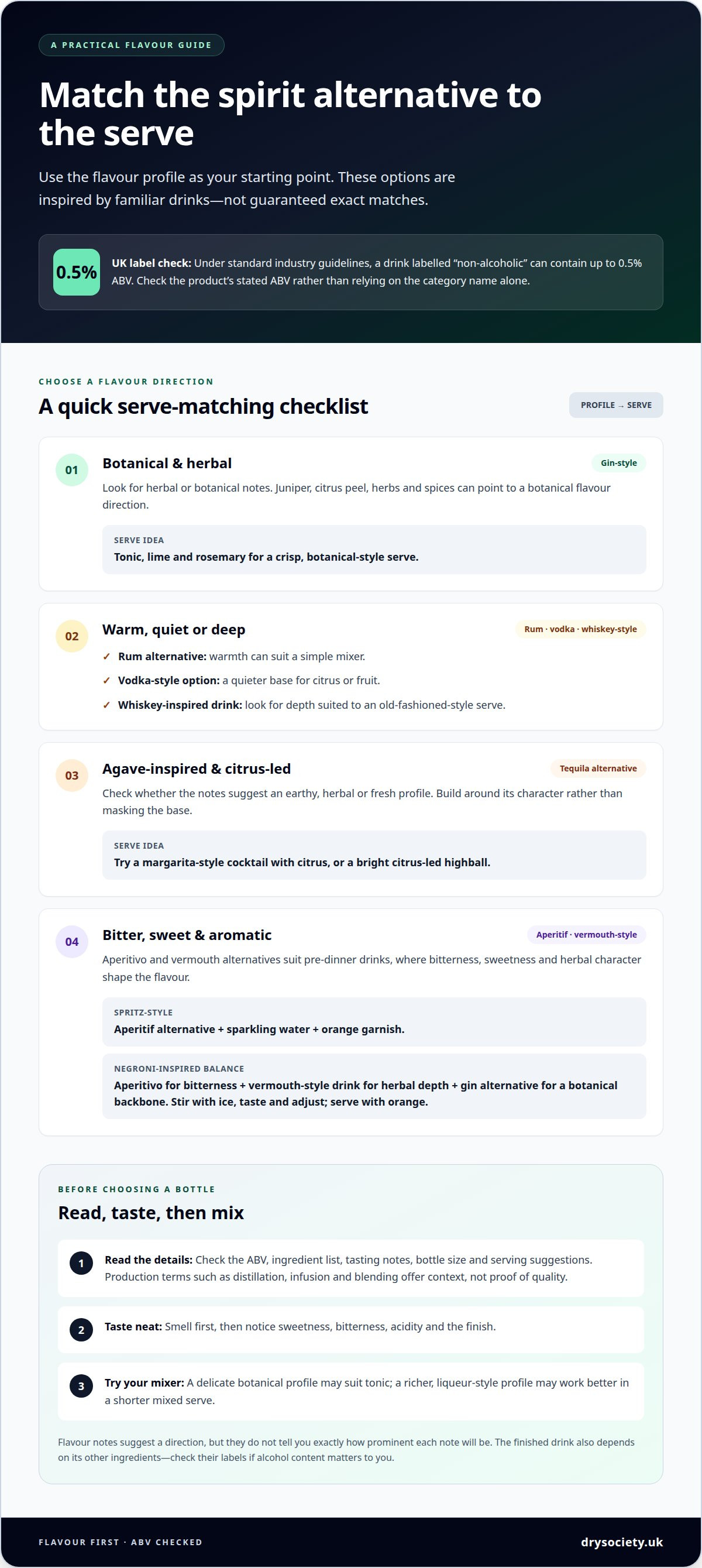
Spirit alternatives are designed to offer familiar flavour profiles, not necessarily identical recipes. Match the style to the drink you want to make.
Gin, Rum, Vodka and Whiskey Alternatives
A gin alternative often foregrounds herbal or botanical notes, making it a natural fit for tonic or a martini-style serve. Rum alternatives can bring warmth to a simple mixer, while vodka-style options offer a quieter base for citrus or fruit. For whiskey-inspired drinks, look for depth that suits an old-fashioned-style serve. The original spirit’s flavour profile is a useful guide, not a promise of an exact match.
Aperitif and Vermouth Alternatives
Aperitivo and vermouth alternatives suit pre-dinner drinks, where bitterness, sweetness and herbal character shape the flavour. For a simple spritz-style serve, pair an aperitif alternative with sparkling water and an orange garnish. In a martini-style serve, a vermouth alternative can add aroma and balance. Check the product’s flavour notes, then adjust the mixer to keep the drink in harmony.
Non-Alcoholic Tequila Alternatives
Tequila alternatives may take inspiration from agave, the plant associated with tequila production. They can be a starting point for a margarita-style cocktail or a bright, citrus-led highball. Look for descriptions that indicate whether the profile is earthy, herbal or fresh. Build the drink around that character, using citrus for lift and a restrained garnish rather than masking the base.
Non-Alcoholic Negroni Alternatives
A Negroni-inspired serve balances bitter, sweet and aromatic notes. Choose an aperitivo alternative for bitterness, a vermouth-style drink for herbal depth and a gin alternative for a botanical backbone. Stir with ice, taste and adjust the balance before serving with orange. This gives the drink a recognisable flavour structure while letting each alcohol-free ingredient contribute its own character.
Alcohol content rules and zero-proof labeling
In the United States, federal regulations allow drinks containing 0.5% alcohol by volume or less to be labelled nonalcoholic. That threshold helps explain why “nonalcoholic” doesn’t necessarily mean zero alcohol. For a product’s actual alcohol content, look for its stated ABV rather than relying only on the front-label description.
“Zero-proof” is another label phrase, but it doesn’t tell you a drink’s precise ABV. Compare the wording with the product’s alcohol statement and ingredient information. A bottled cocktail and a spirit alternative, for example, may both use zero-proof language while having different flavours and serving suggestions.
When comparing non alcoholic spirits in the UK with products labelled for sale in the US, pay attention to where each drink is marketed. A phrase used on a UK-facing product may not mean the same thing as wording on a US label. ABV is a practical point of comparison across markets, particularly for imported bottles or mixed cases.
- Read the label: distinguish “nonalcoholic” and “zero-proof” from the stated ABV.
- Compare products: use the percentage shown, not just the category name.
- Consider the serve: check whether the drink is ready to pour or intended for mixing.
For US shoppers exploring non alcoholic spirits in the UK market, label details clarify a product’s stated alcohol content before you choose a serve. Consider flavour separately: a bitter mixer can add depth, while a floral or sparkling drink may suit a lighter evening. Use the ABV to understand alcohol content and the product description to find a flavour profile that fits your plans.
Dry Society: Almave Ámbar & Blanc Christmas Agave Spirit Duo
Dry Society’s Almave Ámbar & Blanc Christmas Agave Spirit Duo offers an agave-inspired choice for a considered alcohol-free gathering. It brings two named expressions together, giving hosts a way to explore different serves while keeping the occasion centred on flavour and ritual.
Almave Blanco is described as a blue agave spirit with 0% ABV. For the duo, use each bottle according to its label and serving guidance, then pair a chosen pour with a suitable mixer. Citrus or sparkling water can provide a simple starting point, while a garnish adds a finishing touch. The right serve depends on the flavour profile you want at the table.
For a different kind of gift, Dry Society also offers the Alcohol-Free Wine Gift Duo - Pack of 3 and Wednesday’s Domaine Rose Elan - Alcohol Free Rose Wine. Contact Dry Society to discuss your selection.
Choose a serve that feels like yours
Make your next alcohol-free occasion your own. Start with flavours you enjoy, then choose a bottle or gift to suit the moment, whether you’re hosting friends or marking a celebration. Exploring non alcoholic spirits in the UK can mean creating a fresh ritual, not simply replacing a familiar drink.
Dry Society offers options for different tastes and occasions, including the Alcohol-Free Wine Gift Duo - Pack of 3, Wednesday’s Domaine Rose Elan - Alcohol Free Rose Wine, and Almave Ámbar & Blanc Christmas Agave Spirit Duo. Each gives you a different direction for thoughtful gifting or setting out a distinctive pour.
Choose the style that appeals to you, and let it shape your next gathering or quiet evening. Contact Dry Society to discuss your options, and take the next step towards a more considered drinks table.
Frequently Asked Questions
Which UK brands sell non-alcoholic gin, whisky, rum and aperitifs?
Dry Society’s catalogue includes alcohol-free drinks such as Pentire Coastal Spritz, Pentire Adrift, Pentire Seaward and Pentire Paloma, alongside the Almave Ámbar & Blanc Christmas Agave Spirit Duo. The product names alone don’t establish that each drink is a gin, whisky, rum or aperitif substitute. For a particular cocktail style, choose according to the product description and intended serve rather than assuming a one-to-one match.
How much do non-alcoholic spirits cost in the UK?
Prices vary by product and format, so there’s no single useful price for every non-alcoholic spirit. A bottle and a gift duo aren’t directly comparable: consider the number and size of bottles, and whether the item is ready to serve or intended for mixing. Dry Society displays prices alongside its products, making it easier to compare options by format and occasion.
How do UK non-alcoholic spirits compare in taste and ingredients?
Non-alcoholic spirits differ in flavour, ingredients and intended use. A botanical-led drink may suit a tonic serve, while an agave-inspired option can form the base of a citrus-led cocktail. Compare ingredient descriptions and tasting notes with the drink you plan to make. For a practical test, try a small pour with your preferred mixer before making a full cocktail.
What does 0.0% ABV mean, and can non-alcoholic spirits contain trace alcohol in the UK?
0.0% ABV is the product’s stated alcohol-by-volume figure. Some alcohol-free drinks can contain a small amount of alcohol: for example, both bottles in the Almave Ámbar & Blanc Christmas Agave Spirit Duo are listed at 0.5% ABV. If you’re choosing a product based on its alcohol content, compare its stated ABV rather than relying on “alcohol-free” or “zero-proof” wording alone.
What UK labelling rules apply to alcohol-free and non-alcoholic drinks?
“Non-alcoholic” has no official UK government ABV threshold. Voluntary guidance describes alcohol-free drinks at 0.05% ABV and allows the term for drinks containing up to 0.5% ABV; low-alcohol drinks are below 1.2% ABV. These terms aren’t interchangeable. Read the product’s exact wording and ABV together, especially when comparing products with different descriptions.
Are non-alcoholic spirits safe during pregnancy or for people avoiding alcohol?
Don’t assume that “alcohol-free” means a product contains no alcohol, since some can contain trace amounts. If avoiding alcohol completely is important, choose a product labelled 0.0% ABV and read its product information carefully. During pregnancy, speak with your midwife or healthcare professional about individual choices; a drink’s marketing term alone can’t establish whether it’s suitable for you.