

Alcohol-Free Sparkling Wine: How It’s Made, Paired and Priced
The sparkle isn’t the hard part; preserving a wine-like sense of flavour is. Alcohol-free sparkling wine typically begins as still wine, which is then dealcoholized; some bottles contain less than 0.5% alcohol by volume, while 0.0% options are also available. The starting wine and the way its alcohol is removed shape the finished drink’s character, so bottles can vary in freshness, aroma and body.
If you enjoy the ceremony of a chilled, bubbling pour, you don’t have to sacrifice thoughtful flavour when choosing an alcohol-free sparkling wine. This guide explains how these drinks are made, how to pair them with food and how to assess value for your budget. You’ll also find practical tips for serving and choosing a style that suits the occasion, from a light aperitif to a celebratory toast.
Key Takeaways
- Understand how dealcoholizing a finished wine differs from making a drink designed to be alcohol-free, and what that can mean for flavour.
- Choose pairings such as cheese, fruit or seafood to complement the wine’s sparkle and style.
- Assess value by weighing flavour, production approach and the occasion, not just the bottle’s presentation.
1. How is non-alcoholic sparkling wine made?
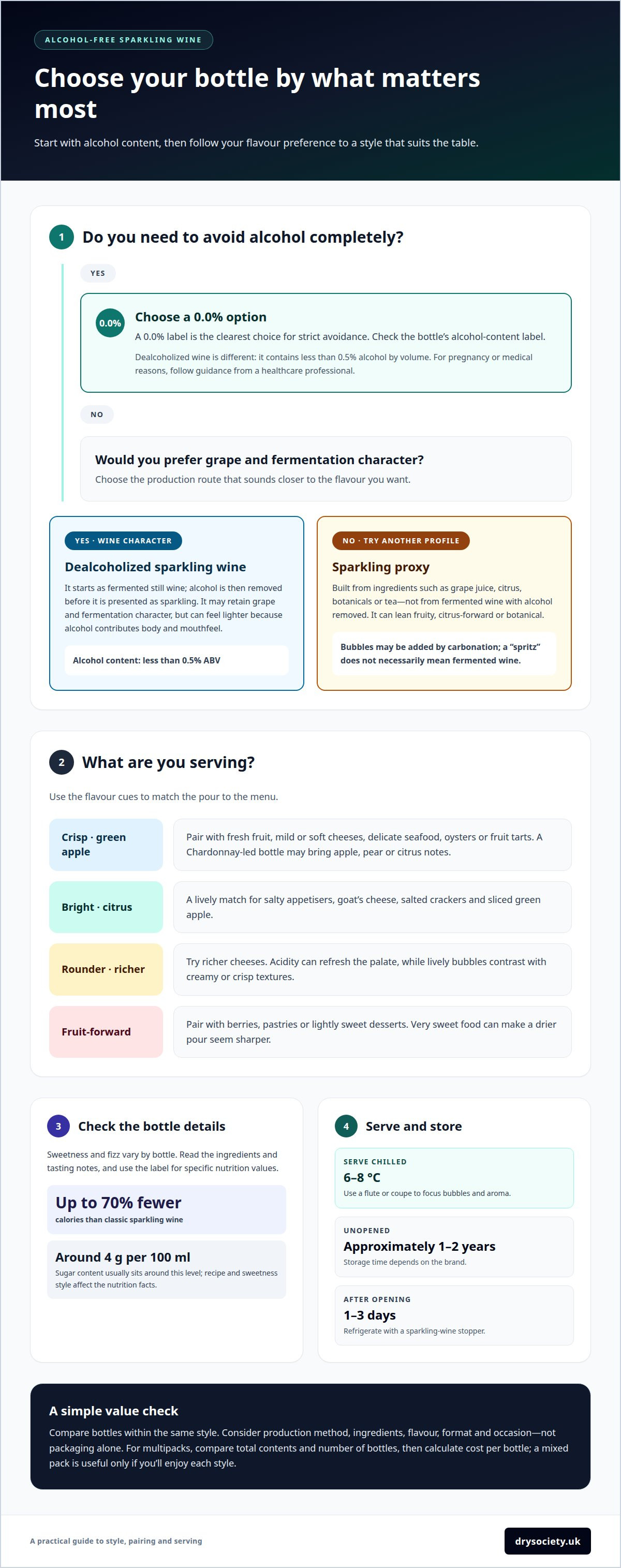
Most dealcoholized sparkling wines begin as still wine made through fermentation. Producers then remove alcohol before presenting the wine as sparkling. This sequence can help preserve grape-derived aromas and complexity, though removing alcohol changes the drink’s structure. Alcohol contributes body and mouthfeel, so the finished wine may feel lighter than its alcoholic starting point. A 0.0% label and a dealcoholized wine aren’t necessarily the same thing.
Dealcoholized wine contains less than 0.5% alcohol by volume, while alcohol-free or zero-alcohol wine contains 0.0%. The difference matters if you’re choosing a drink for someone avoiding alcohol completely. A purposefully non-alcoholic sparkling drink takes a different route: it’s built from ingredients such as grape juice, citrus, botanicals or tea, rather than starting with fermented wine and removing its alcohol. These sparkling proxies can offer a wine-like ritual without being dealcoholized wine.
Fizz also depends on how a drink is made. A dealcoholized wine may have bubbles added after alcohol removal, while a sparkling proxy can be carbonated. These choices, along with the grape base or other ingredients, shape the final texture and aroma. Citrus-forward ingredients, for example, can give a proxy a brighter profile, while grape-based sparkling wines may retain familiar wine aromas. “Spritz” can describe a style of drink, not necessarily a wine made through fermentation.
How do alcohol-free sparkling wines compare in taste, sweetness and bubbles? Dealcoholized versions can retain grape and fermentation character, though they may feel lighter; proxies often lean on fruit, citrus or botanicals. Sweetness and fizz vary by bottle, so check the ingredients and tasting notes before choosing.
In the US, wines other than standard wines must carry a designation that adequately describes their true composition and distinguishes them from standard wines, according to the Legal Information Institute. “Champagne” refers to sparkling wine from France’s Champagne region, so an alcohol-free proxy shouldn’t be described as Champagne.
Is alcohol-free sparkling wine safe during pregnancy or for people avoiding alcohol? A 0.0% option is the clearest choice for strict avoidance; dealcoholized wine can contain less than 0.5% alcohol by volume. Anyone avoiding alcohol for pregnancy or medical reasons should follow guidance from their healthcare professional.
2. Food pairings
For celebrations, choose an alcohol-free sparkling wine that complements the food rather than competing with it. A crisp cuvée with green apple notes suits fresh fruit, mild cheese and delicate seafood. Brighter citrus flavours can lift salty appetisers, while a rounder profile works with richer cheeses. Acidity refreshes the palate between bites, and lively bubbles contrast with creamy or crisp textures.
Match the cuvée’s flavour profile to the menu. A Chardonnay-led bottle may offer apple, pear or citrus notes, making it a natural partner for oysters, soft cheeses or fruit tarts. For a savoury spread, try goat’s cheese, salted crackers and sliced green apple. If the wine is fruit-forward, serve it with berries or lightly sweet desserts; very sweet food can make a drier pour seem sharper.
What are the best options for celebrations and food pairings? For a versatile table pour, choose a balanced sparkling wine and pair it with cheese, fruit or seafood. For brunch, a fruit-led style suits pastries and berries; with seafood, consider a crisp cuvée with lively acidity.
This sparkling style can have up to 70% fewer calories than classic sparkling wine. Sugar content usually sits around 4 g per 100 ml, but the recipe and sweetness style affect the nutrition facts, so use the bottle’s label for its specific values.
Serve alcohol-free sparkling wine well chilled at 6–8 °C, using a flute or coupe to focus the bubbles and aroma. This helps bring freshness to the glass alongside foods often served with alcoholic wines, without requiring alcoholic drinks on the table.
Store an unopened bottle for approximately 1–2 years, depending on the brand. After opening, keep it refrigerated with a sparkling-wine stopper and enjoy it within 1–3 days, while its bubbles and freshness remain lively.
3. Sparkling wine price and value
A bottle’s price reflects more than its label or celebratory packaging. Production method, grape sourcing, flavour development and presentation can all affect the price. Dealcoholization adds a production step, while sparkling proxies may use different ingredients and methods. Compare like with like: a grape-based wine and a sparkling drink made with botanicals are different products.
Value starts in the glass. Look for a balanced profile with enough acidity, aroma and mouthfeel for the occasion. A premium bottle may offer more layered flavour, but packaging alone won’t tell you whether it suits your menu. Consider how you’ll serve it, too: a bottle for a special toast may have different priorities from one poured with dinner.
Multipacks can suit celebrations with several guests, especially when every bottle works with the same menu. Compare the total contents and number of bottles, then calculate the cost per bottle. A mixed pack offers variety, but its value depends on whether you’ll enjoy each style. For a smaller gathering, a single bottle may be the more considered purchase.
How much does alcohol-free sparkling wine cost, and where can you buy it? Prices vary by production method, ingredients and format, so compare the listed price and bottle size before deciding. Online retailers sell these drinks, and their product descriptions can help you assess style and serving options.
For a mindful drinking choice, check the label for alcohol content, sweetness cues and ingredients. These details help explain differences in taste and production, but don’t guarantee a particular level of quality. Compare bottles within the same style, then consider flavour, format and occasion together. That gives you a more useful measure of value than choosing by packaging or price alone.
4.
For a New Year’s toast, a delicate, dry-leaning profile can suit savoury canapés; for a birthday brunch, a fruitier style may pair better with pastries. Check the bottle description for flavour and sweetness cues, then match them to the occasion.
First, distinguish sparkling wine with alcohol removed from sparkling drinks made without a wine base. The former begins as wine, while a proxy may use fruit, botanicals or other ingredients. This difference can shape the taste: one may retain grape and fermentation notes, while another leans towards citrus or botanical flavours. Neither approach automatically makes one bottle a better choice.
What are the best-rated options in the US? There’s no single top pick for every palate or celebration. Use published ratings as one signal, then look for detailed tasting comments on sweetness, bubbles and finish that suit the drinks you plan to serve.
For a practical shortlist, compare bottles against three points:
- Style: Choose grape-led sparkling wine for familiar wine character, or a proxy for a more ingredient-driven flavour.
- Sweetness: Match a drier taste to salty snacks and a fruitier profile to brunch or dessert.
- Occasion: Consider whether the bottle is for a welcome pour, a meal or a single celebratory toast.
Check the label for alcohol content and ingredients, especially if “alcohol removed” matters to you. A smaller bottle can suit a quiet toast; a larger format may work better for a shared table, provided its listed price fits your budget.
Keep expectations grounded: alcoholic sparkling wines and alcohol-free alternatives can differ in body, sweetness and flavour. Detailed tasting notes are more useful than a high rating alone, helping you choose a drink that suits your celebration.
Dry Society
Dry Society helps you explore alcohol-free drinks for celebrations, with a curated selection suited to different tastes and occasions. If you’re choosing a bottle as a gift or want to compare wine styles, the Alcohol-Free Wine Gift Duo – Pack of 3 offers a way to explore several wines, while Wednesday's Domaine Rose Elan is an alcohol-free rosé option.
Use this buying guide to decide what matters most: wine-like character, sweetness, bubbles or a particular food pairing. Then browse Dry Society’s alcohol-free range with your occasion and preferences in mind. For a gift pairing, the Christmas Pierre Zéro Rosé & Gruyère Drinks Biscuits Duo combines rosé wine and savoury biscuits.
For help choosing an alcohol-free option for your celebration, contact Dry Society.
Make Your Next Celebration Feel Considered
Let the occasion guide your choice. A relaxed brunch, a formal toast and an evening with friends each call for a different mood, so choose a bottle that suits the people and food around your table. The right bottle is one whose flavour and style you’ll be glad to pour. Alcohol-free sparkling wine can make a toast feel special while offering guests a considered alternative.
Think beyond the first glass, too. A distinctive bottle can set the tone for a gathering, while alcohol-free sparkling wine gives guests an appealing option that feels part of the occasion. Serve it with care, make room for it on the table and let everyone enjoy the ritual in their own way.
Ready to find a bottle for your next gathering? Contact Dry Society for recommendations, and choose a celebratory pour that feels just right.
Frequently Asked Questions
How is non-alcoholic sparkling wine made?
Alcohol-free sparkling wine often starts as fermented wine, which is then dealcoholized before being made sparkling. Its aroma and texture depend partly on the original wine and how its character is preserved. For a practical comparison, pour it alongside a sparkling proxy made from fruit or botanicals. Notice whether grape, citrus or botanical notes lead, then choose the style that suits your menu.
Does it actually taste like wine?
Some alcohol-free sparkling wine retains recognisable grape aromas and wine-like acidity, while sparkling proxies can taste more of fruit or botanicals. Neither tastes exactly like every alcoholic wine, and results vary by bottle. Try a chilled glass with a familiar pairing, such as mild cheese or fresh fruit, and focus on aroma, sweetness and finish rather than expecting an identical substitute.
What is alcohol-free sparkling wine, and how is it made?
This sparkling drink is either made from dealcoholized wine or is a non-wine alternative. Dealcoholized versions begin as fermented wine, while proxies use ingredients such as fruit or botanicals. If you want wine-derived character, look for a grape-based bottle; for a different flavour direction, explore a proxy and read its ingredients.
Does alcohol-free sparkling wine contain any alcohol in the United States?
It depends on the bottle: 0.0% options contain no alcohol by the stated figure, while dealcoholized wines can contain less than 0.5% alcohol by volume. Read the label rather than relying on “alcohol-free” alone, especially if avoiding alcohol completely. US law requires wines other than standard wines to have a designation describing their composition, according to the Legal Information Institute.
What are the best-rated alcohol-free sparkling wines in the US?
There’s no single top pick for every palate or celebration. Use published ratings as one signal, then compare tasting comments on sweetness, bubbles and finish.